First in Class Facilitation- Bridging Polarities for Inclusive Leadership
- tools2connect
- Nov 19, 2025
- 3 min read

Updated: Dec 10, 2025
Overcoming and bridging polarities is an essential thing to do in order to achieve a more inclusive society. We believe one way of doing this is through connecting people and create an environment that fosters deep-listening and effective communication between people. This is why, when we had the chance to facilitate some exercises in a second-year class on Inclusive Leadership at Global Project and Change Management at Hogeschool Windeshiem, Zwolle, we tried our best to enhance these two skills.
What is Polarity?
Polarity refers to the presence of opposing viewpoints or values that often lead to conflicts or misunderstanding. An example can be when Team members have different views on how a project should be executed .
Understanding the polarity can help to have a broader view on the problem, and so making a step towards a possible solution.
It is important to keep in mind that the diversity of point of views in polarization does not have to be necessarily negative, it can also offer opportunities for growth and innovation, if dealt with in a proactive way.
First Excercise
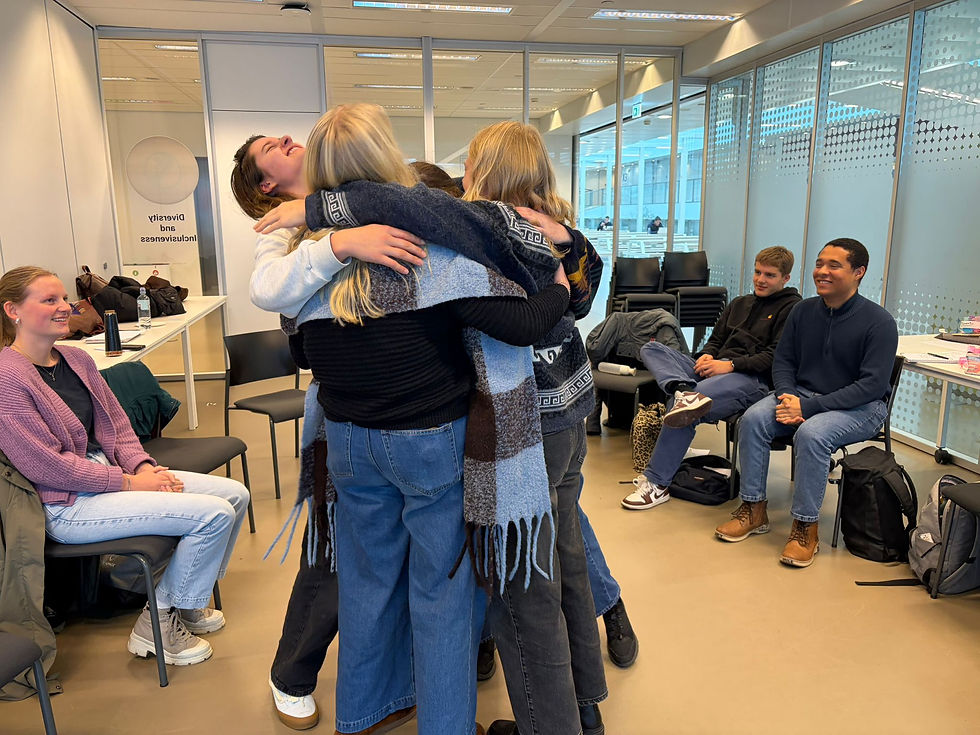
During the exercises we facilitated in class we tried to make the people involved in the workshop work on their empathy (full exercise explained in OurTools section). This was done by giving them the space to embody a sentence we came up with to create division:
'' Does everyone deserves a seat at the table?''
Embodying this instead of discussing it, gave them the chance to skip the rationalization of the concept, and focus on feelings, both when they were embodying and when they were witnessing the others doing the same.
This, later sparked a conversation which was emotion based and not so much rationalized, which gave us the space to work on their empathy to define an inclusive leader.
Empathy is one of the most powerful tools to bridge polarity. By empathizing with others perspectives, it is easier to understand where their belives stems from.
Exercising empathy in a team can lead to:
Improved communication: When people feel more heard and understood, they are more willing to listen and understand other perspectives.
Strenghten trust: Where trust is essential for collaboration, especially in a team-work environment.

Second Exercise
The second exercise we facilitated in class aimed to let the participants practice active listening and creative problem solving.
We managed to this by proposing a bridge building exercise (explained thoughtly in OurTools section).
At first we divided the class in three groups. Each individual received a string, to use later in the exercise, and the groups received brief instructions on how to build the bridge.
The instructions being:
Building the bridge keeping the strings tight.
Building the bridge keeping the strings loose.
The third group was instructed in observing the two groups to later came up with a design that would merge the other two.
The three groups were thought to represent respectively tight/loose strings the two polarities, third group a mediator group.
When the mediation between the two groups started it was interesting to notice how difficult it was for the mediators to put two different ideas together and make the co-exist.

What stuck with us was the frustration of some participants to the idea of not having their design included enough in the end results.
But this allowed them to work on active listening which is not just hearing what people say but really understanding them. They had to put this in practice when they had to build the bridge all together while also practicing leadership and followership.
Prototyping is also an important step in the creative problem-solving journey they were on. They tried different combinations before finding the one that worked the best for them, and all of these solutions had to implement creativity skills and flexibility.


Comments